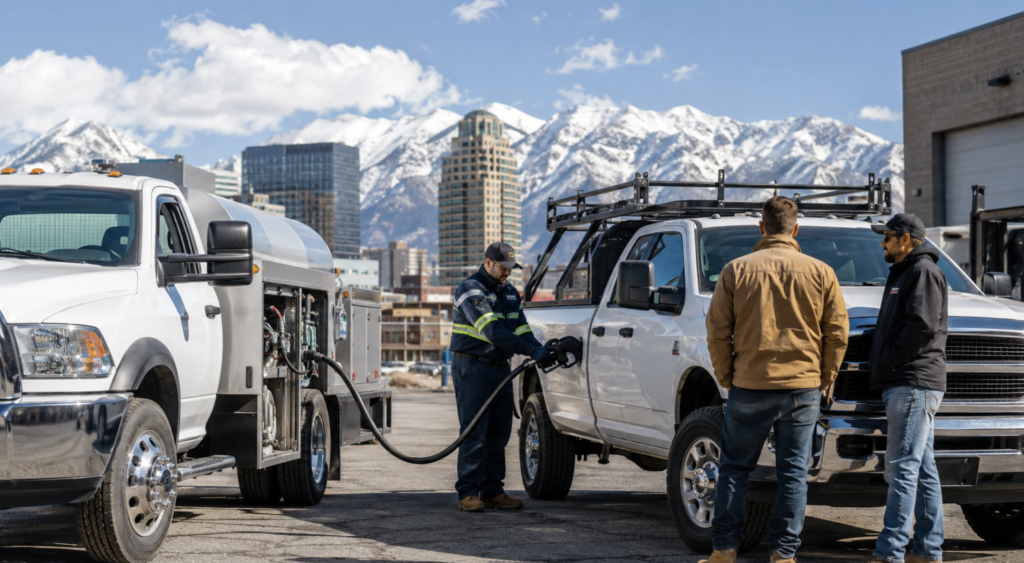
Running a business in Salt Lake City takes planning, discipline, and the ability to keep operations moving without unnecessary interruptions. From hotels and banks to construction companies, delivery fleets, property managers, warehouses, retail centers, and service-based businesses, fuel plays a larger role than many people realize. When vehicles, equipment, generators, or fleet trucks need fuel, every delay can create a ripple effect across the workday. That is why many companies are looking for smarter ways to manage their fuel needs without pulling employees away from the job.
Mobile Fuel Delivery Salt Lake City gives businesses a more convenient way to keep vehicles and equipment ready without depending on repeated gas station stops, last-minute fuel runs, or wasted labor hours. For busy businesses, this service can support productivity, reduce downtime, and help teams stay focused on the work that matters most.
Salt Lake City continues to be an important business hub in Utah. The city is known for its central location, transportation access, growing business community, and strong connection to industries such as trade, transportation, utilities, professional services, construction, hospitality, government, healthcare, and technology. According to Wikipedia’s overview of Salt Lake City, the city’s modern economy is service-oriented and supported by major sectors that rely on movement, scheduling, and dependable infrastructure. For companies operating in this kind of environment, dependable fuel access is not just a convenience. It is part of staying competitive.
Why Fuel Planning Matters for Salt Lake City Businesses
Fuel is one of those business needs that can be easy to overlook until there is a problem. A truck needs to leave for a job, but the tank is low. A crew arrives early, but equipment is not ready. A delivery vehicle has to stop before completing its route. A generator needs fuel before an important event, hotel operation, job site, or facility project. These moments may seem small, but they can cost time, create frustration, and slow down the entire day.
For busy businesses, time is one of the most valuable resources. Every unnecessary stop takes employees away from their responsibilities. Every delay can affect customer service, job completion, staffing schedules, or delivery timelines. Mobile fuel delivery helps remove that friction by bringing fuel directly to the business location, fleet yard, job site, or equipment area.
The business climate in Salt Lake City rewards companies that operate efficiently. The Salt Lake Chamber describes its mission as supporting business success and community prosperity, which reflects the larger push toward stronger local operations and business growth. Fuel delivery fits into that mindset because it allows companies to simplify one of their recurring operational needs.
Instead of building the workday around fuel stops, businesses can build fuel into their operations. That shift can make a noticeable difference for companies with multiple vehicles, rotating crews, or equipment that needs to be ready at specific times.
Mobile Fuel Delivery Supports Better Productivity
One of the biggest advantages of mobile fuel delivery is the ability to save productive hours. When employees have to leave the worksite or business property to fuel up, the business is paying for more than fuel. It is also paying for travel time, waiting time, mileage, and lost momentum.
For a company with one vehicle, that may seem manageable. For a business with several trucks, vans, service vehicles, or pieces of equipment, those small delays can add up quickly. Mobile fuel delivery can reduce the need for employees to handle fuel runs during the workday. That means more time serving customers, completing jobs, managing operations, and supporting revenue-generating tasks.
Salt Lake City businesses operate in a region where growth, workforce demands, infrastructure needs, and economic development all matter. The Governor’s Office of Economic Opportunity highlights programs and initiatives designed to support Utah entrepreneurs and businesses. In a market where businesses are working to grow and remain efficient, better fuel planning can become part of a larger operational strategy.
This is especially helpful for companies that depend on early starts. Contractors, delivery companies, maintenance crews, hotel transportation teams, security companies, property managers, and field service businesses often need vehicles ready before the day begins. Having fuel delivered can help crews start on time instead of beginning the morning with a stop at the pump.
A Smarter Option for Fleets, Equipment, and Job Sites
Mobile fuel delivery is not only helpful for traditional fleets. It can also support businesses that use heavy equipment, generators, temporary fuel tanks, refrigerated units, or machinery. Construction companies, commercial property managers, event venues, hotels, industrial facilities, and municipal contractors may all need dependable fuel access without interrupting operations.
Salt Lake City’s economy includes transportation, trade, business services, tourism, healthcare, and construction-related activity. The Salt Lake City Department of Economic Development focuses on small business support, corporate recruitment, business retention, foreign trade, and strategic initiatives. These areas all point to a city where businesses are expected to move, build, serve, and adapt.
Fuel delivery can support that kind of business activity by meeting companies where they are. A construction crew may need diesel delivered to a job site. A hotel may need fuel support for shuttles or backup equipment. A warehouse may need fuel for fleet vehicles. A service company may need trucks ready for a full day of appointments. A property management company may need fuel for equipment during maintenance, repairs, or seasonal work.
The value is not only in receiving fuel. The value is in reducing operational friction. When fuel is handled more efficiently, teams can stay focused on service, safety, scheduling, and performance.
Helping Businesses Reduce Downtime and Improve Scheduling
Downtime can be expensive. When vehicles or equipment are not ready, people stand around waiting. Jobs start late. Customers may be inconvenienced. Crews may have to reshuffle priorities. Managers may have to spend time solving problems that could have been prevented with better planning.
Mobile fuel delivery gives businesses a more organized way to manage fuel. Instead of relying on drivers to remember to fuel up, managers can create a more consistent fueling plan. This can support better scheduling, especially for businesses that operate several vehicles or have crews spread across different locations.
The Salt Lake Chamber Roadmap to Prosperity Dashboard was created with the University of Utah’s Kem C. Gardner Policy Institute to help business leaders better understand Utah’s economic outlook. That kind of decision-making mindset matters. Strong businesses look at the details that affect cost, labor, efficiency, and reliability. Fuel management is one of those details.
For many companies, a better fuel plan can also support accountability. Managers can have a clearer picture of when fuel is delivered, where it is going, and how it supports operations. That can be easier than depending on scattered receipts, multiple gas station stops, or inconsistent employee fueling habits.
Why Salt Lake City’s Business Growth Makes Fuel Delivery More Valuable
Salt Lake City is not a sleepy market. It is a growing, active business center with companies competing for customers, workers, contracts, and opportunities. Local business news continues to show movement in economic development, business expansion, infrastructure, and industry growth. The Salt Lake Business Journal covers regional business news across Salt Lake, Utah, Davis, and Weber counties, showing how active the broader business environment is.
As the region continues to grow, businesses need practical services that help them operate with less waste. Mobile fuel delivery can become one of those services because it supports the daily rhythm of business. It helps companies prepare before the workday begins, respond to fuel needs without disrupting operations, and reduce the time employees spend away from their main responsibilities.
For companies that operate in competitive industries, small improvements can create meaningful advantages. A crew that starts on time has a better chance of finishing on time. A delivery vehicle that is ready to go can serve customers more reliably. A hotel shuttle that stays fueled can support guest experience. A generator that is ready can protect important operations. A fleet that is fueled consistently can help the business maintain a more professional, dependable standard.
A Better Fit for Businesses That Value Convenience and Control
Business owners and managers are constantly looking for ways to simplify recurring tasks. Fuel is one of those tasks that does not go away. Vehicles and equipment need it day after day, week after week. The question is whether the business wants to keep managing it the hard way or shift to a more convenient system.
Mobile fuel delivery can help businesses gain more control over this recurring need. It can reduce unnecessary errands, help prevent last-minute shortages, and make fuel part of the company’s planned operations instead of a daily interruption.
The Kem C. Gardner Policy Institute provides economic research and reporting on Utah’s economy, including the Economic Report to the Governor. For business owners, this kind of data-driven thinking reinforces an important point: strong operations are built on smart decisions. Fuel delivery may seem like a small change, but for the right business, it can support a more efficient and dependable operation.
This is especially true for businesses with recurring routes, multiple vehicles, early-morning crews, equipment-heavy work, or customer-facing transportation. When fuel becomes easier to manage, the entire operation can feel more organized.
Mobile Fuel Delivery Can Strengthen Customer Service
Customers may never see the fuel plan behind a business, but they often feel the results. When vehicles arrive on time, crews show up prepared, deliveries happen as scheduled, and services run smoothly, customers experience a business that feels dependable.
For hotels, reliable fuel access can support shuttles, maintenance needs, and backup planning. For banks or professional offices, it can support facility operations, service vendors, and emergency readiness. For contractors, it can help crews arrive prepared. For delivery companies, it can support route consistency. For property managers, it can help maintenance teams respond faster.
The Deseret News business section covers Utah business updates and local economic developments, which shows how important business reliability is in a competitive and growing region. Companies that want to stand out need to look for practical ways to serve customers better. Fuel delivery can be one of those behind-the-scenes improvements that helps the front-facing business run more smoothly.
Conclusion
Mobile fuel delivery gives Salt Lake City businesses a smarter way to manage one of their most important daily needs. Instead of losing time to fuel stops, dealing with last-minute shortages, or pulling employees away from their responsibilities, businesses can have fuel brought directly to their location, fleet, equipment, or job site.
For busy businesses, the value is clear. Mobile fuel delivery can support productivity, reduce downtime, improve scheduling, strengthen customer service, and give managers more control over daily operations. In a business environment as active as Salt Lake City, those advantages matter.
Whether a company operates vehicles, equipment, generators, service trucks, delivery vans, or job site machinery, a dependable fuel strategy can help the business stay prepared. Mobile fuel delivery is not just about convenience. It is about helping businesses run with more confidence, more consistency, and less wasted time.