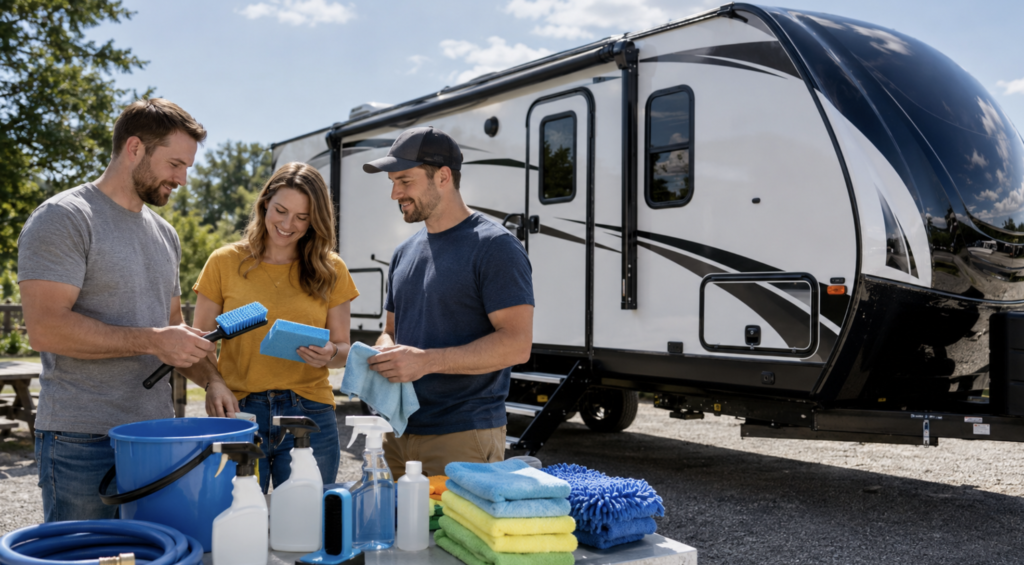
Keeping a trailer clean is not just about appearance. A clean trailer looks more professional, lasts longer, and helps protect the surfaces that take a beating from road grime, rain, oxidation, dust, bugs, tree sap, salt, and everyday outdoor exposure. Whether the trailer is used for hauling, travel, business, equipment, livestock, or recreational use, the right cleaning products can make the job easier and help the trailer look newer for longer. 🛒
This trailer cleaning shopping guide breaks down what to buy, what to look for, and how to build a practical cleaning kit without wasting money on products that do not fit the job. Shopping for trailer care supplies can feel overwhelming because there are so many soaps, brushes, cleaners, degreasers, protectants, sprayers, and specialty products available. The best approach is to focus on the condition of the trailer, the surface material, and the type of dirt or staining you need to remove.
As consumer shopping habits continue to shift between online and in-store buying, resources such as Wikipedia’s overview of shopping show how product research, convenience, and comparison shopping have become part of everyday purchasing decisions. That same idea applies to trailer cleaning supplies. A little research before buying can help you choose better products, avoid damage, and get more value from every wash.
Start with the Right Trailer Cleaning Solution
The first item to shop for is a cleaner made for the type of trailer surface you have. Many trailers are aluminum, fiberglass, painted metal, vinyl-sided, or gelcoat finished. A general household cleaner may seem convenient, but it is not always the right choice for exterior trailer surfaces. Some cleaners can be too harsh, while others are too weak to cut through road film and oxidation.
A dedicated Trailer Wash product is a smart place to begin because it is designed specifically for cleaning trailer surfaces. The goal is to remove dirt, grime, and stains without creating unnecessary surface damage. When comparing products, look for cleaners that are appropriate for exterior use, safe for the trailer material, and strong enough to handle the buildup that comes from highway driving and outdoor storage.
Many trailer owners make the mistake of buying the cheapest soap on the shelf and expecting professional results. A quality wash product should help loosen grime, rinse clean, and prepare the surface for additional care if polishing or protecting is needed afterward. The better the cleaner, the less scrubbing you usually need, which also lowers the chance of scratching the trailer.
Buy a Soft-Bristle Wash Brush for Large Surfaces
A soft-bristle wash brush is one of the most useful tools for trailer cleaning. Trailers have large flat areas, and washing them by hand with a small sponge can take much longer than necessary. A brush with soft, flagged bristles helps spread cleaner over wide areas while reducing the risk of marks or scratches.
When shopping for a brush, choose one that connects to an extension pole. This makes it easier to reach the upper areas of the trailer without constantly climbing up and down a ladder. A lightweight pole is usually better for long cleaning sessions because heavy tools can tire your arms quickly.
Avoid stiff deck brushes unless you are cleaning rough flooring or non-delicate surfaces. What works well on concrete or a shop floor may be too aggressive for painted, polished, or fiberglass trailer exteriors. The goal is to remove dirt, not grind it into the surface.
Choose Microfiber Towels Instead of Old Rags
Microfiber towels are worth adding to your trailer cleaning shopping list because they are softer and more absorbent than many old cotton rags. They are especially helpful for drying, wiping trim, cleaning windows, and touching up smaller areas after washing.
Old shirts, shop towels, and rough rags can sometimes leave lint, streaks, or light scratches. Microfiber towels are designed to hold dust and moisture while being gentle on surfaces. Buy a multi-pack so you can separate towels by use. For example, keep one set for exterior drying, one for wheels and dirty areas, and one for windows or polished surfaces.
This small shopping decision can make the trailer look cleaner when the job is done. A good wash can be ruined by streaks, lint, or dirty towel marks, so having clean microfiber towels ready is an easy upgrade.
Look for a Reliable Hose Nozzle or Pressure Sprayer
Water control matters when washing a trailer. A basic hose can work, but a good nozzle or sprayer makes rinsing faster and more efficient. When shopping, look for a nozzle with multiple spray settings so you can switch between a wide rinse, a stronger stream, and a gentle shower pattern.
A pressure washer can be helpful, but it should be used carefully. High pressure can force water into seams, vents, decals, trim, and areas that are not designed to take direct pressure. For many trailer owners, a standard hose with a quality nozzle is enough for regular cleaning.
If you do use a pressure washer, choose a lower setting and keep the nozzle at a safe distance from the surface. The purpose is to rinse away loosened dirt, not blast the finish. A good sprayer should save time while helping protect the trailer.
Add a Bucket with a Grit Guard
A proper wash bucket is another simple but important purchase. A grit guard sits at the bottom of the bucket and helps trap dirt below the cleaning tool. Without one, your brush, sponge, or mitt can pick up grit from the bottom of the bucket and drag it back across the trailer.
This is especially important for trailers that have glossy paint, fiberglass, or polished surfaces. Small particles of dirt can act like sandpaper during washing. A grit guard does not make the wash process perfect, but it does help reduce the chance of swirling and scratching.
Many people think a bucket is just a bucket, but trailer cleaning goes better when the tools are organized. A large, durable bucket with a grit guard gives you more control and helps keep the wash water cleaner for longer.
Shop for a Bug and Road Grime Remover
The front of a trailer often collects the worst buildup. Bugs, tar, road film, grease, and oily residue can stick to the surface and become difficult to remove with standard soap alone. A bug and grime remover can help loosen those stubborn spots before the main wash.
When choosing one, read the label carefully. Some products are made for automotive finishes, while others are more aggressive. The best option is one that works on the specific material of your trailer and does not harm decals, paint, gelcoat, or trim when used correctly.
Apply these products only where needed and do not let them dry on the surface. Spot cleaners are helpful, but they should not replace a full wash. They are best used as part of a step-by-step process: loosen the grime, wash the area, rinse well, and dry.
Buy Wheel and Tire Cleaning Supplies Separately
Trailer wheels and tires usually need their own cleaning products because they collect brake dust, grease, mud, and road debris. Using the same towel or brush on the trailer body after cleaning tires can spread grime and create scratches. A separate wheel brush, tire brush, and set of towels is a smart purchase.
Wheel cleaners should be chosen based on the wheel material. Aluminum, painted wheels, chrome, and coated wheels can require different types of care. A cleaner that is safe for one finish may not be ideal for another. Always check the product instructions before using it.
Tire cleaner can improve the overall appearance of the trailer, especially if the body is clean but the tires look dull and dirty. A clean trailer with dirty wheels still looks unfinished, so this is an area worth including in your shopping plan.
Consider a Surface Protectant After Washing
Once the trailer is clean, a protectant can help maintain the finish. Depending on the trailer surface, this may include wax, polish, sealant, ceramic spray, UV protectant, or a product made for gelcoat or fiberglass. The right choice depends on the surface condition and the look you want.
Protectants can help reduce future buildup and make the next wash easier. They may also help with shine, water beading, and UV defense. This is especially useful for trailers stored outdoors where sun exposure can fade and dull the finish over time.
For older trailers with oxidation, washing alone may not restore the look completely. In that case, a cleaner may need to be followed by polishing or restoration products. Shopping for protection after cleaning helps move the trailer from “washed” to “well maintained.”
Use Shopping Research to Compare Quality and Value
Shopping for trailer cleaning products should not be based only on price. The cheapest item may cost more in the long run if it requires extra work, damages the finish, or needs to be replaced quickly. On the other hand, the most expensive product is not always necessary for every trailer owner.
Consumer-focused resources such as Consumer Reports are useful examples of how buyers can compare products, evaluate claims, and think about long-term value. While trailer cleaning products may not all be reviewed in the same place, the same shopping principle applies: look for product details, customer feedback, material compatibility, and clear usage instructions before buying.
For broader retail and shopping behavior, organizations like the National Retail Federation regularly discuss trends affecting how consumers shop, compare products, and respond to value. Trailer owners can use that same value-driven mindset when building a cleaning kit. The goal is not to buy every product available. The goal is to buy the right products for the trailer’s condition and cleaning needs.
Do Not Forget Safety Supplies
Trailer washing can involve ladders, wet surfaces, cleaning chemicals, and long-handled tools. Safety supplies should be part of the shopping list. Gloves can protect your hands from cleaners and grime. Safety glasses can help prevent splashes. Non-slip shoes can reduce the chance of slipping while rinsing or moving around the trailer.
If you use a ladder, choose one that is stable and tall enough for the job. Do not overreach while washing high areas. An extension pole is often a safer option than climbing repeatedly, especially when cleaning the upper sides of a tall trailer.
The Federal Trade Commission’s online shopping guidance also reminds consumers to check sellers and products before making purchases. That advice is helpful when buying cleaning chemicals and tools online. Make sure the seller is legitimate, the product description is clear, and the return policy is understandable before ordering.
Build a Practical Trailer Wash Shopping List
A good trailer cleaning kit does not need to be complicated. Start with the essentials: a trailer-safe wash product, soft-bristle brush, extension pole, microfiber towels, hose nozzle, bucket, grit guard, bug remover, wheel brush, tire cleaner, and surface protectant.
From there, add specialty products only as needed. If the trailer has oxidation, look for restoration products. If it has a lot of decals, choose cleaners that are decal-safe. If it is frequently exposed to salt, mud, or heavy road grime, buy products designed for tougher exterior cleaning.
Retail and consumer spending reports from sources like the U.S. Census Bureau’s Monthly Retail Trade report show how much shopping activity happens across retail categories, including online and nonstore retailers. For trailer owners, that means there are more buying options than ever, but also more products to sort through. A clear list helps prevent impulse purchases and keeps the focus on what will actually help clean and protect the trailer.
Pay Attention to Reviews, But Read Them Carefully
Customer reviews can be helpful, but they should be read with common sense. A product may have great reviews from people using it on cars, boats, RVs, or equipment, but that does not always mean it is perfect for your trailer. Look for reviews from people with similar trailer surfaces and similar cleaning problems.
A good review usually explains what the person cleaned, how they used the product, and what results they got. A vague review that only says “great product” is less useful. Negative reviews can also be helpful if they mention problems like streaking, strong odor, poor rinsing, or damage to a certain surface.
Shopping news and retail coverage from sources such as Retail Brew often highlights how product discovery, e-commerce, and consumer trends continue to shape buying decisions. That is important because many trailer owners now discover cleaning products through ads, online marketplaces, videos, and social media. Those can be useful, but the final decision should still come down to product fit, safety, and results.
Think About Storage and Long-Term Maintenance
After buying trailer cleaning products, store them properly. Keep cleaners sealed, out of extreme heat, and away from children or pets. Store brushes and towels where they can dry completely. Dirty, damp towels can develop odors and may carry grit into the next wash.
A simple storage bin can help keep everything together. Labeling towels or separating them by use can also help. For example, keep tire towels away from body towels. Store chemicals upright and check them before each use.
Trailer cleaning is easier when supplies are ready. If everything is scattered across the garage, shed, or truck, the job feels bigger than it really is. A clean, organized kit makes regular washing more likely.
Conclusion
A cleaner, better-looking trailer starts with smarter shopping. The right products can make washing easier, protect the trailer’s surface, and help maintain a professional appearance over time. Instead of buying random cleaners and hoping they work, build a practical kit around the trailer’s material, condition, and most common cleaning problems.
Start with a quality trailer-safe cleaning solution, then add the tools that make the job easier: a soft wash brush, microfiber towels, hose nozzle, bucket with grit guard, spot remover, wheel supplies, and a surface protectant. Use trusted shopping resources, compare products carefully, and avoid harsh shortcuts that may damage the finish.
As AP’s retail and wholesale coverage shows, shopping trends and consumer buying decisions are always changing, but one principle stays the same: informed buyers usually make better purchases. For trailer owners, that means choosing cleaning products that do more than sit on a shelf. The right wash supplies help keep the trailer clean, sharp, protected, and ready for the road. ✅